

The coronavirus’s impact on the liquidity of European and American financial markets seems to be particularly serious. Even after major countries such as the Federal Reserve jointly launched liquidity support measures, stocks still fell as usual. At present, the three major US stock indices futures have triggered the circuit breaker once again.
The injection of liquidity seems to have little effect
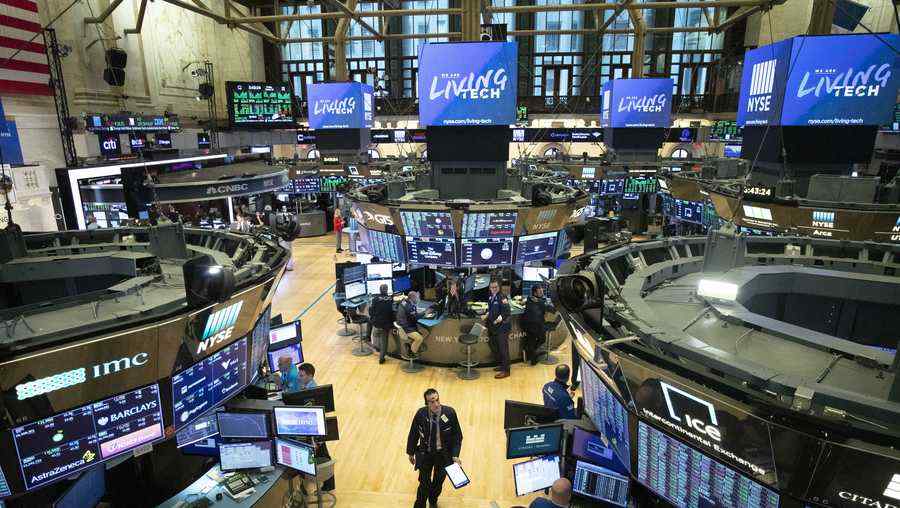
New York Stock Exchange to temporarily close trading floor due to coronavirus
The Fed resumed its rescue plan for the 2008 financial crisis on the 17th, alleviating the tightness of liquidity in the credit market through measures such as commercial paper financing fund (CPFF) purchase arrangements and provision of short-term loans to primary traders. After the news was announced, the stock market responded positively. High-quality companies such as Pepsi and Verizon Communication also sold long-term debt on the same day.
But on Tuesday (March 17), the three-month US dollar London Interbank Offered Rate (Libor) soared, hitting its largest one-day increase since the October 2008 financial crisis, jumping 16.25 basis points to 1.05188%. Libor is the global interest rate benchmark for trillions of dollars in financial products, which shows that despite policymakers injecting liquidity into the market in recent days, investors still have difficulty obtaining dollars.
The cost of acquiring the dollar against several major currencies has skyrocketed amid liquidity concerns. The EUR / USD cross-currency swap basis point reached its highest level since 2011. The USD / JPY swap is also close to a record level, and the GBP / USD swap has reached levels ever since 2008.
Due to the shortage of the US dollar, the US dollar index rose by 1.65%, the largest single-day increase since Brexit in June 2016. It once approached the near three-year high of 99.91 reached on February 20 and is now reported near 99.43.
George Saravelos, head of currency research at Deutsche Bank, said, "We have underestimated the magnitude of the dollar's funding pressure, and we are concerned that it may be more difficult to resolve the dollar shortage than policy makers have envisioned."
The tightness of liquidity in financial markets should be more severe than the market reaction, which can also explain that the Fed has simply "sacrifice" the ultimate weapons such as interest rate cuts, aside from regular monetary policy meetings.
Disclaimer: The views expressed are solely those of the author and do not represent the official position of Followme. Followme does not take responsibility for the accuracy, completeness, or reliability of the information provided and is not liable for any actions taken based on the content, unless explicitly stated in writing.

Leave Your Message Now