


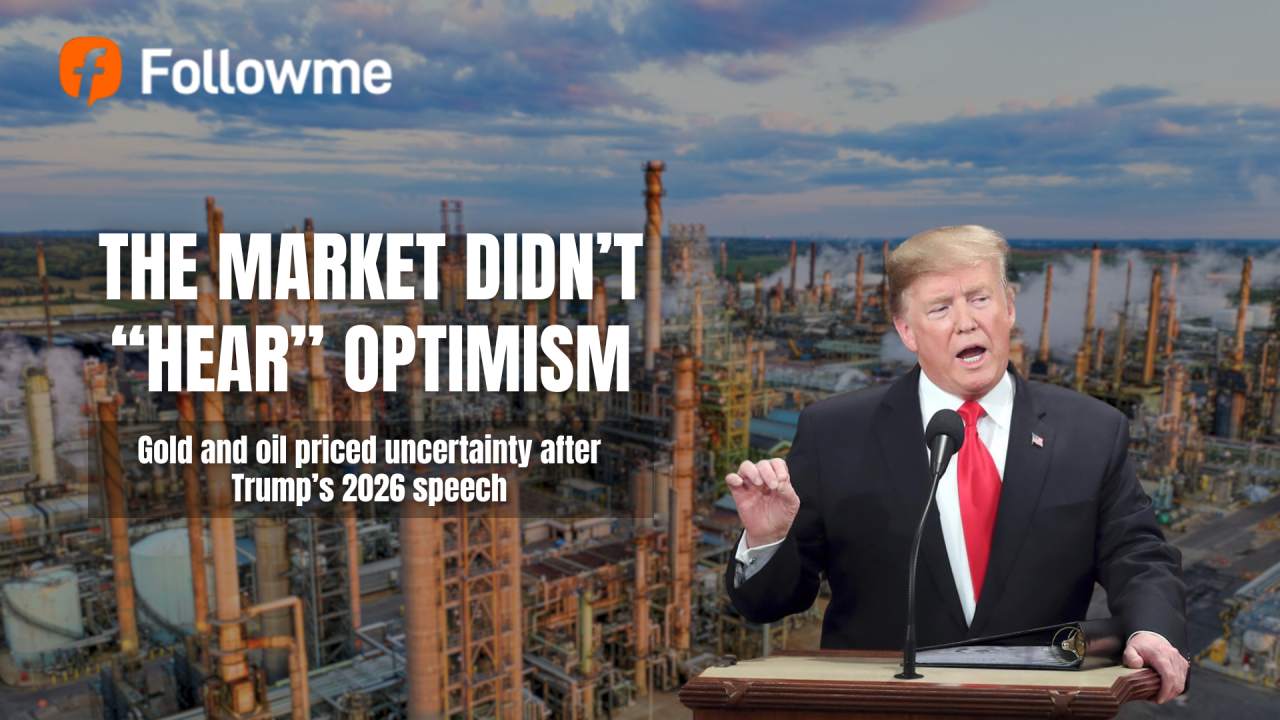
Gold Ceiling (why strength can still be choppy): A firmer dollar and higher for longer rate expectations can cap how aggressively gold extends higher, because holding a non-yielding asset becomes relatively more expensive. That is why gold can stay supported yet trade in bursts instead of a clean, straight-line trend.
Oil Read (why crude is not paying for fear right now):
Oil’s weakness is straightforward: diplomacy plus barrels beat fear. Crude eased as the U.S. and Iran signaled more talks, lowering the probability of an immediate supply shock, while the market also watched for incremental supply additions and the broader 2026 supply glut narrative.
Key Trigger: The Strait of Hormuz is the real trigger level for crude. The market tends to fade temporary spikes unless shipping faces a persistent threat, because traders care less about scary headlines and more about whether flows are actually impaired long enough to tighten inventories.
What changed after Trump’s 2026 speech:
Trump’s 2026 speech mainly influenced gold through policy durability risk rather than “optimism.” The market focused on how trade rules might keep changing after the Supreme Court knocked down earlier tariffs and Trump shifted to a new tariff framework, which keeps growth and inflation expectations harder to model and supports gold’s uncertainty hedge role.
Gold stayed firm near $5,200 because traders still wanted protection against geopolitical tension and policy whiplash, even though a stronger USD and “higher for longer” rate expectations can cap how fast gold extends higher.
For oil, speech mattered less than physical flow probabilities. Crude faded as U.S. Iran talks were extended (reducing the immediate disruption premium) while markets also weighed signs of rising supply, including Venezuela flow expectations, which reinforces the idea that without sustained Strait of Hormuz disruption, rallies can be temporary.
-
Risk hedge channel: JPY and CHF can firm when uncertainty rises, even if equities look calm.
-
Oil sensitivity channel: CAD and NOK often react to crude’s direction and expectations for energy margins.
-
Trade policy channel: Tariff uncertainty can jolt USD crosses by shifting growth, inflation, and rate expectations quickly.
-
Set a max daily drawdown and a max drawdown per theme (tariffs, Iran, supply deals).
-
Use event windows to reduce exposure during peak headline hours.
-
Monitor spreads and slippage, because execution quality can change faster than direction.
-
Avoid chasing late candles and anchor decisions to scenario triggers.
In trader terms, gold priced “uncertainty staying high,” while oil priced “no confirmed supply shock plus more barrels,” explaining why the two moved in opposite directions.
👉If you want to apply macro thinking to real trading decisions, follow Followme to get access to trading insights, copy trading discovery, and community discussions that help you connect strategy.
Disclaimer: The views expressed are solely those of the author and do not represent the official position of Followme. Followme does not take responsibility for the accuracy, completeness, or reliability of the information provided and is not liable for any actions taken based on the content, unless explicitly stated in writing.

-THE END-