


On November 28, 2025, the world’s largest futures exchange, CME(Chicago Mercantile Exchange), suffered a major outage due to a data center failure. Trading in gold, forex, indices, and other products came to a halt, and spreads widened dramatically. This event not only shook global markets but also exposed a common misconception: low spreads do not equal good risk management.
The Market Reality During the CME Outage
- True Market Reaction: Gold spreads surged to 10–20 times their normal levels, while liquidity in major currency pairs evaporated.
- Liquidity Providers’ Response: Market makers widened spreads to protect themselves from unhedgeable risk.
- Broker Promotions: Some brokers advertised “stable low spreads” during the chaos, claiming it was proof of strong risk management.
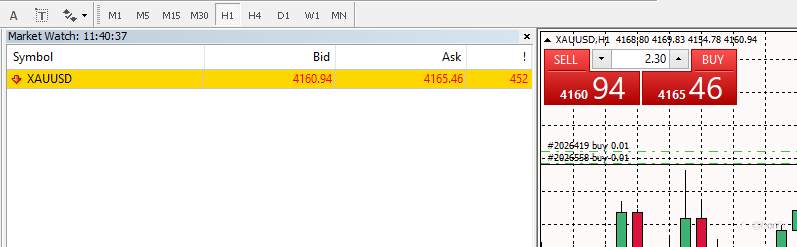
Why Low Spreads ≠ Good Risk Management
Real Market vs. Internal Matching
- Brokers connected to Tier-1 liquidity providers (STP/ECN) must follow market conditions, meaning spreads widen in extreme volatility.
- If spreads remain artificially low, it often indicates internal matching (B-book) rather than true market execution.
The True Meaning of Risk Management
- Risk management is about protecting client funds, ensuring transparency, and reflecting real market risk.
- Keeping spreads artificially low is not risk control—it’s masking volatility.
Client Education
- Low spreads in extreme conditions are not an advantage but a warning sign.
- In such cases, clients are effectively trading against the broker, not the market.
How to Identify Real Risk Management

- Transparency: Does the broker explain why spreads widened?
- Market Consistency: Do spreads move in line with global benchmarks?
- Fund Safety: Is there a clear compliance and risk framework protecting client capital?
A Simple Analogy
Imagine a storm at sea. Every ship slows down for safety—that’s real risk management. If one ship claims it can sail at full speed, that’s not safer; it’s reckless. The same applies to financial markets: wider spreads are a natural safety measure, while artificially low spreads are a red flag.
Conclusion
The CME outage reminds us that transparency and authenticity are the core of risk management. Low spreads do not mean better protection. True risk management is about showing clients the real market, safeguarding their funds, and staying compliant—even when volatility strikes.
Note: CME stands for the Chicago Mercantile Exchange, part of CME Group, the world’s largest derivatives marketplace. It offers trading in futures and options across asset classes like equities, foreign exchange, commodities, and interest rates.
Disclaimer: The views expressed are solely those of the author and do not represent the official position of Followme. Followme does not take responsibility for the accuracy, completeness, or reliability of the information provided and is not liable for any actions taken based on the content, unless explicitly stated in writing.

Leave Your Message Now