


· Views 17,093
Understanding Copy Trading Metrics: How to Read Performance Like a Pro
In copy trading, most beginners click on the strategy with the biggest ROI and hope for the best. On the surface, it looks logical: high return = good trader. The numbers on a copy trading page are not decoration; they are a complete risk profile of the trader you’re about to partner with. Once you know how to read those metrics properly, you stop guessing and start making decisions like a professional money manager.
Followme’s copy trading board and signal pages give you exactly this kind of data – from weekly returns and drawdown to risk scores and trading history – but you need to know how to interpret it.
1. Why Copy Trading Metrics Matter More Than “High ROI”
When you copy a trader, you are not just copying their profit; you are copying their risk behavior.
A strategy that turned 50% in one week might have used extreme leverage, held no stop-loss, and survived only because the market moved in its favor. Another strategy might show “only” 5% a month, but with small, controlled drawdowns and consistent risk management. Over six to twelve months, the second one is usually the survivor.
Good metrics analysis helps you answer three critical questions:
-
Is this trader’s performance sustainable?
-
What kind of risk did they take to get these returns?
-
Does their style match my capital, psychology, and risk tolerance?
If you cannot answer those three questions from the metrics, you’re not ready to click “Copy”.
2. Core Metrics You Must Understand
Different platforms display slightly different data, but the most serious copy trading environments provide variations of the same core metrics. Here’s how to interpret them in the right way:
a) Followers, Weeks and Social Proof
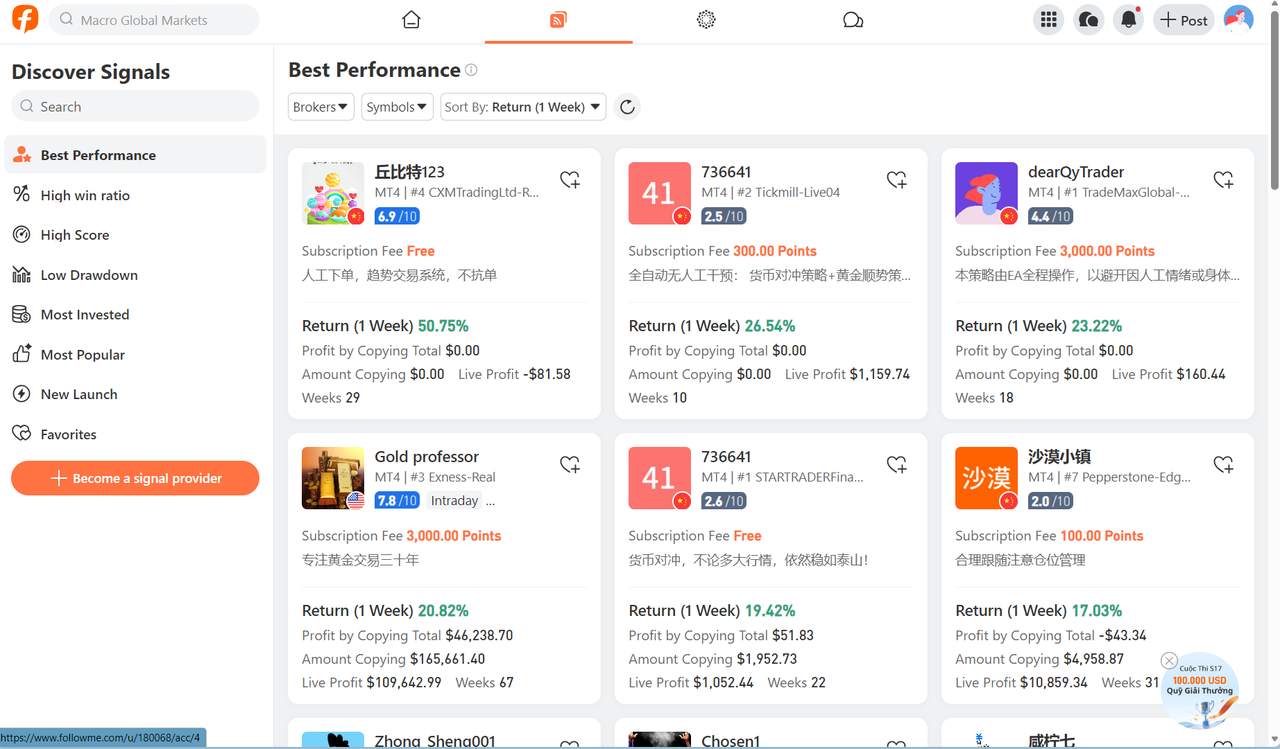
On the Followme's Best Performance board, each signal card displays the number of weeks the strategy has been active and how many people are already copying or following that trader.
A large, stable follower base over many weeks can signal market trust and a proven track record. However, don’t copy just because “everyone else is doing it”.
Watch the trend: If subscriptions and followers are steadily increasing while performance and drawdown remain healthy, that is a positive sign. If the strategy is only a few weeks old with explosive returns, treat it as unproven.
b) Return (1 Week) and Multi-Period Performance
Followme highlights Return (1 Week) on the Best Performance list, and on the strategy page you can see broader metrics such as Return (3 Months) and longer-term curves under the Performance tab.
Short-term return is useful for identifying active, currently performing strategies, but it is never the full story. A strategy that ranks #1 on weekly returns, but has only traded for 3–4 weeks is very different from one with solid, steady returns over 30–60 weeks. Always cross check high short-term returns against:
-
The number of weeks live
-
Maximum drawdown percentage
-
The shape of the equity curve
c) Equity, Capital Size and Commitment
On each Followme signal page, you can see the Equity and overall Capital Size of the trading account.
Higher equity usually means the trader has real skin in the game and is less likely to gamble recklessly. Very small capital can be a warning sign: It is easier to take extreme risks when there isn’t much to lose.
Watch how equity has evolved over time, both stable or gradually increasing equity is healthier than a series of emergency deposits to save a sinking account.
d) Risk, Drawdown and the Followme Score
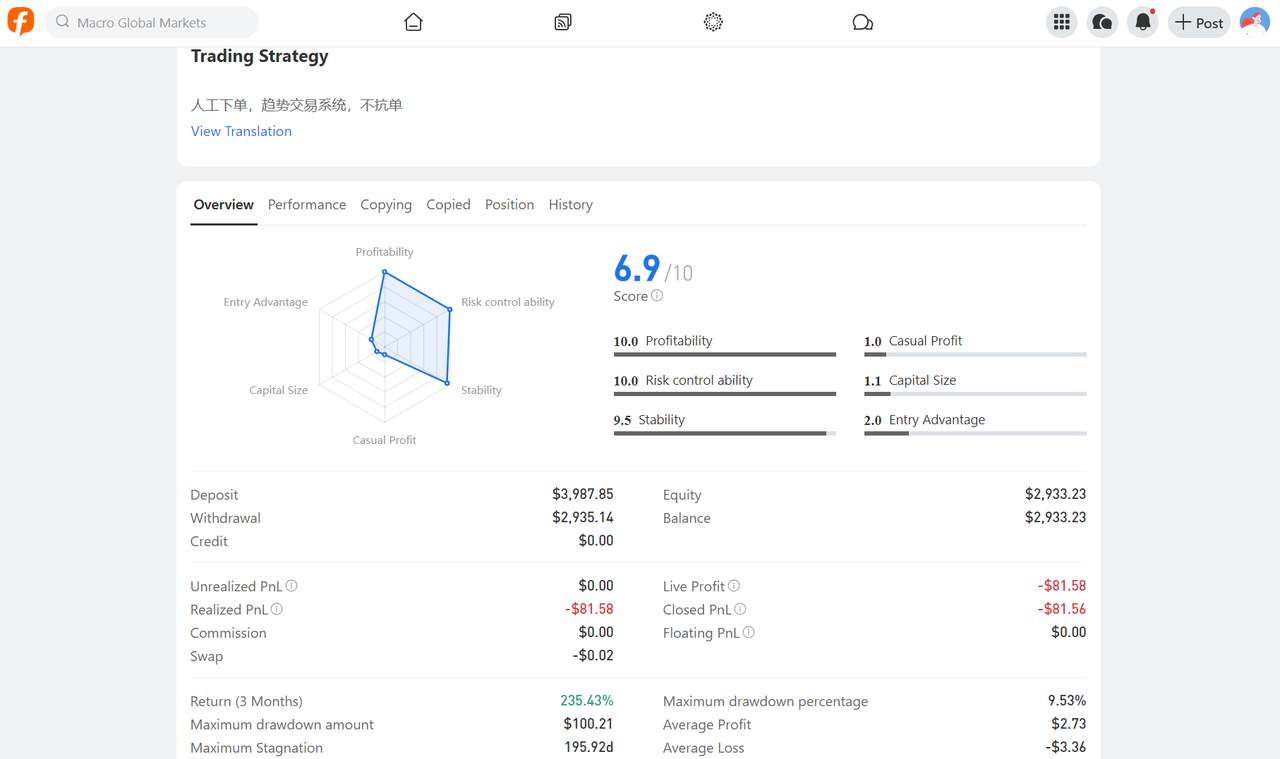
One of Followme’s strengths is the overall score (for example 6.9/10) and the radar chart that breaks the strategy into dimensions such as:
-
Profitability
-
Risk control ability
-
Stability
-
Casual profit
-
Capital size
-
Entry advantage
Alongside this, you see concrete risk numbers: Maximum drawdown amount and percentage, Win rate, number of trades, and Maximum Stagnation (how long the strategy has gone without making a new high).
Instead of looking only at return, compare:
-
High profitability with good risk control and stability – usually a positive sign
-
High profitability but weak risk control and very high drawdown – performance may be fragile
If maximum drawdown sits near 10% with a multi-month return above 200%, that’s a very different risk profile from a strategy showing similar returns but 40–60% drawdown.
e) Trade Behavior: Win Rate, Average Profit/Loss and Duration
Scroll further down the Followme overview and you will see:
-
Win rate
-
Average profit vs average loss
-
Average trade duration
-
Total number of trades
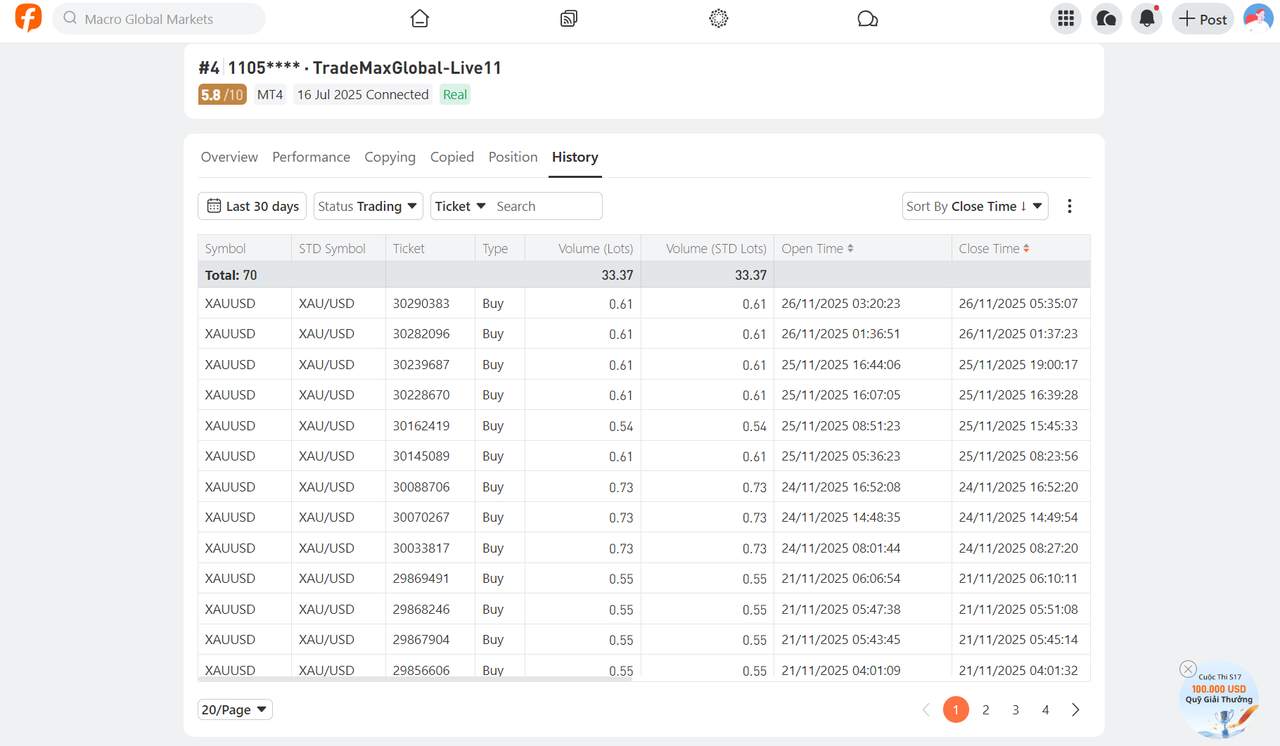
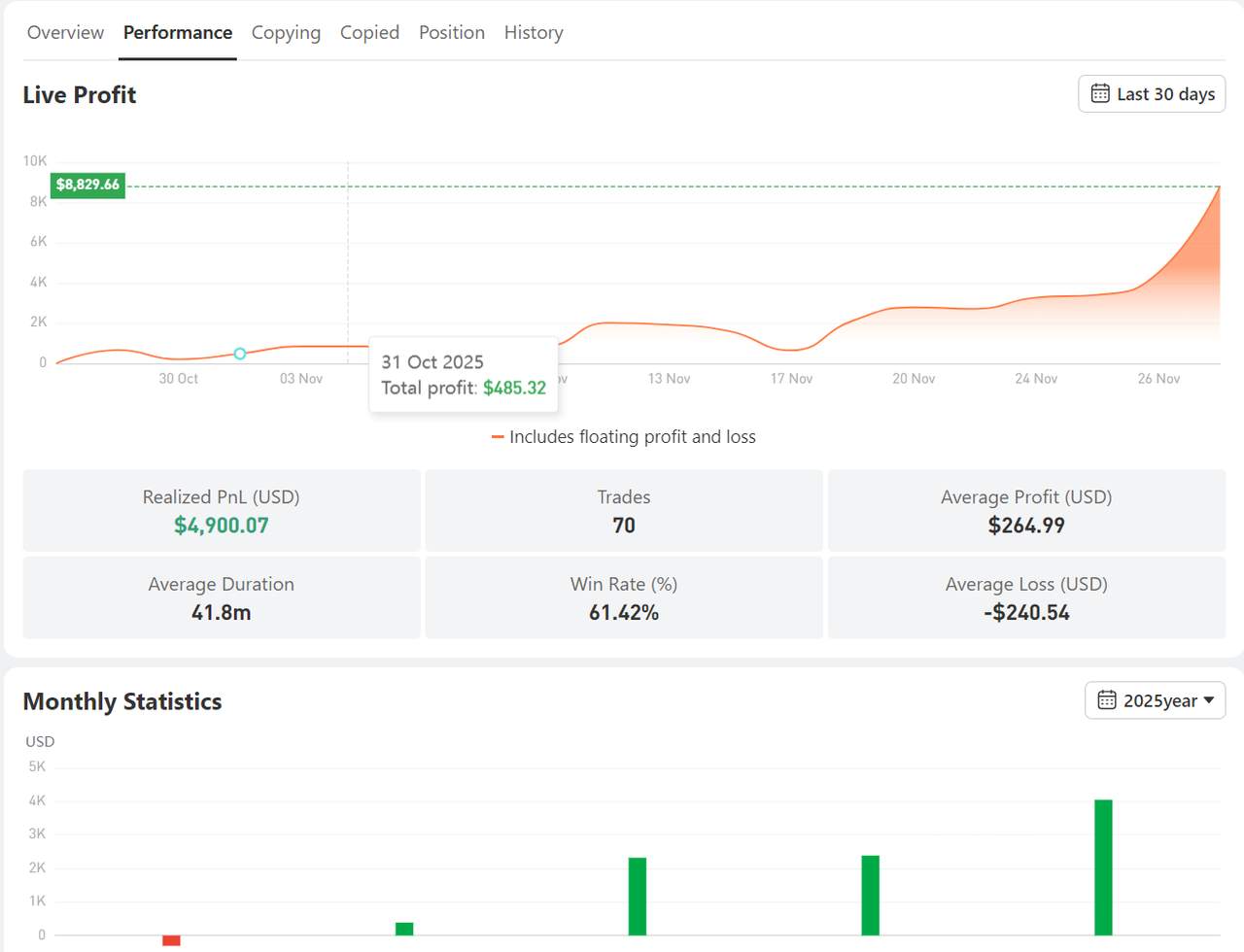
An attractive win rate (for example 60–70%) means very little if the average loss is two or three times larger than the average profit. Professional-grade strategies typically keep their average loss under control and avoid letting losers grow unchecked. Average duration and number of trades also tell you whether this is a scalper, intraday trader or swing style – you can match this to your own expectations of frequency and volatility.
3. Reading the Equity Curve: The “Truth” Behind the Numbers
Percentage returns can be distorted by deposits, withdrawals or short test periods. The equity curve on Followme shows the graph of account value over time, which is far harder to disguise.
Once you know how to read it, you quickly separate stable professionals from strategies that are likely to blow up.
A smooth, diagonal line from bottom-left to top-right, with small controlled dips, signals consistent performance and disciplined risk management.
A flat line around a fixed equity (for example, around $5,000 while the trader remains active) often means they trade with locked capital and fixed lot sizes, which is very predictable for copiers.
A “staircase” pattern – rise, plateau, rise – can indicate a trader who pushes during favorable conditions and protects capital during uncertain periods.
By contrast, be extremely careful with:
-
Near-vertical spikes in equity
-
Deep “V” drops and full recoveries
-
Choppy, saw-tooth curves with no clear structure
These shapes often reflect oversized positions, martingale tactics or emotional trading, no matter how good the headline return looks.
4. Hard Red Flags You Shouldn’t Ignore
No matter how good the headline return looks, these behaviors should make you think twice:
-
No stop-losses on multiple trades – This is gambling with your capital.
-
Hedging the same pair in both directions without a clear strategy – Often a sign the trader is stuck and doesn’t know how to exit.
-
Rapidly increasing lot sizes after losses – Classic martingale behavior. It works… until it doesn’t.
-
Brand-new strategies with huge returns in a short period – There is no real “track record” yet; it might just be luck.
-
Consistently extreme margin levels – The account is always one shock away from disaster.
Risk management is not a detail. In copy trading, boring and disciplined usually beats flashy and reckless over the long term.
5. Turning Followme Metrics into a Professional Selection Process
The real power of Followme is that it doesn’t just show you a single ROI number but it gives you a complete toolset to think like a risk manager before you copy anyone.
A simple workflow could look like this:
1. Discover strategies
Go to Discover Signals → Best Performance / Most Popular. Sort by return, but immediately filter by Weeks and Score so you focus on strategies with a meaningful track record and healthy risk profile.
2. Open the strategy page
Check the radar chart and overall score. Look for strong Profitability, Risk Control and Stability, not just one category maxed out with others near zero.
3. Study the equity curve and drawdown
Under the Performance tab, confirm the equity curve is smooth and consistent, and that maximum drawdown is acceptable for your risk tolerance.
4. Review trading behavior
Use the Overview, Position and History tabs to look at win rate, average profit/loss, number of trades and how long trades are held. Make sure it matches the style you expect.
5. Decide position size and start copying
Only after you are comfortable with both return and risk do you click “Copy Now” and set your capital allocation and minimum investment according to your own account size.
By following a structured process like this, you'll transform your copy trading from “Chasing high ROI cards on a leaderboard” into a professional, data-driven selection method.
A simple workflow could look like this:
1. Discover strategies
Go to Discover Signals → Best Performance / Most Popular. Sort by return, but immediately filter by Weeks and Score so you focus on strategies with a meaningful track record and healthy risk profile.
2. Open the strategy page
Check the radar chart and overall score. Look for strong Profitability, Risk Control and Stability, not just one category maxed out with others near zero.
3. Study the equity curve and drawdown
Under the Performance tab, confirm the equity curve is smooth and consistent, and that maximum drawdown is acceptable for your risk tolerance.
4. Review trading behavior
Use the Overview, Position and History tabs to look at win rate, average profit/loss, number of trades and how long trades are held. Make sure it matches the style you expect.
5. Decide position size and start copying
Only after you are comfortable with both return and risk do you click “Copy Now” and set your capital allocation and minimum investment according to your own account size.
By following a structured process like this, you'll transform your copy trading from “Chasing high ROI cards on a leaderboard” into a professional, data-driven selection method.
Start Reading Metrics Like a Pro on Followme
On Followme, you can:
-
Browse the Best Performance board and see weekly returns, weeks traded, live profit and subscription details at a glance.
-
Open any signal page to analyze the score radar, drawdown, win rate, trade history and equity curve in depth.
-
Use this information to build a portfolio of strategies that match your risk tolerance and goals – then copy them with just a few clicks.
Open Followme, explore the copy trading board, and put these metrics to work before you hit “Copy Now”
Disclaimer: The views expressed are solely those of the author and do not represent the official position of Followme. Followme does not take responsibility for the accuracy, completeness, or reliability of the information provided and is not liable for any actions taken based on the content, unless explicitly stated in writing.
Like this article? Show your appreciation by sending a tip to the author.

-THE END-